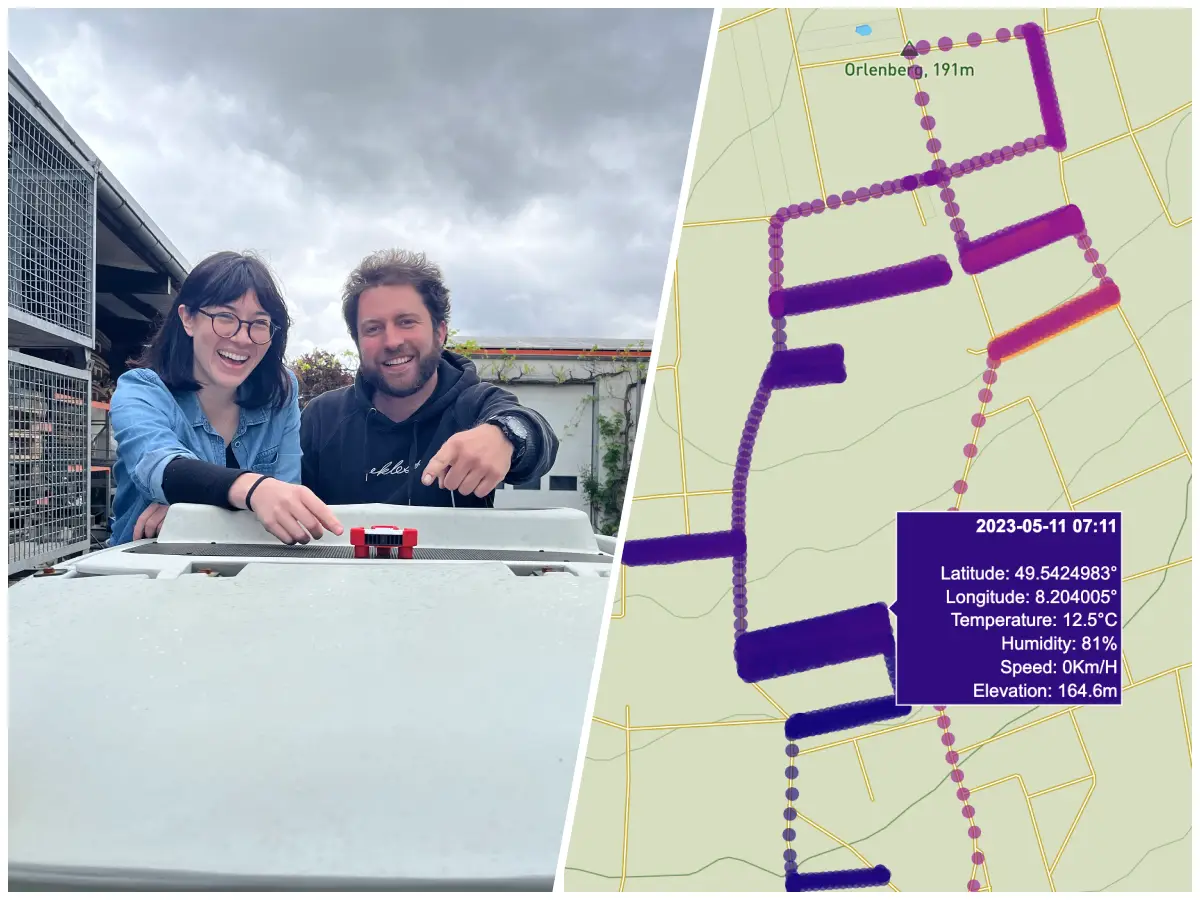
In 2025, we have also worked together with Certis Belchim conducted a field trial to test and improve the VineForecast algorithm. As in the previous year, this showed that the algorithm can save on plant protection measures without the vines being more severely affected by disease.
However, the evaluation of the results was not easy, especially for Powdery mildew - late frost damage and the resulting increased heterogeneity in phenology made a clear evaluation difficult.
You are currently seeing a placeholder content of YouTube. To access the actual content, click on the button below. Please note that data will be passed on to third-party providers.
More informationTest setup: neutral framework and clear comparison variants
The trial took place on a Müller-Thurgau plot on the Pitthan Winery between Zotzenheim and Welgesheim (Rheinhessen). For a neutral realisation the Eurofins Agrartest GmbH from Spiesheim for all treatments and assessments.
As in the previous year, a standard and a VineForecast variant were tested for Downy and Powdery mildew. Each variant covered a complete row of vines approximately 120 metres long. Both variants were treated with the same plant protection products, but differed in the spraying interval:
- Standard variant:fixed interval of approx. 10 days
- VineForecast variant:variable controlled by the algorithm, between 8 and 19 days
In addition, untreated controls were created that were specifically protected against only one of the two diseases. This allowed the other disease to develop freely. The controls of the VineForecast variant were located at the north-western end of the plot, those of the standard variant at the south-eastern end.
Course of the season: special microclimate and frost as key disruptive factors
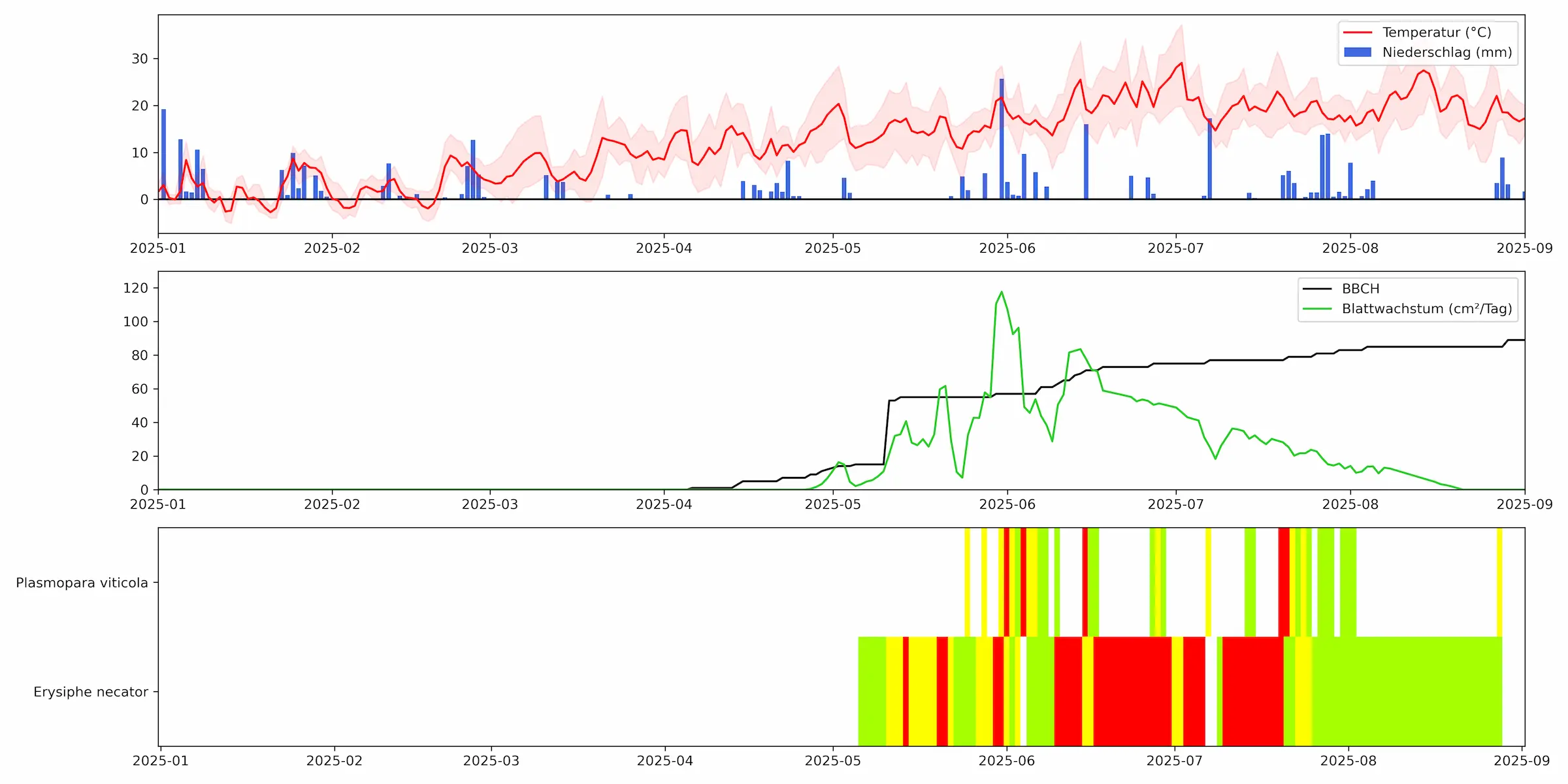
Budding began at the end of April, but with significantly delayed growth compared to neighbouring plants - an indication of a cooler microclimate. Growth was also very uneven: on 5 May, development stages from BBCH 13 to 53 could be observed simultaneously.
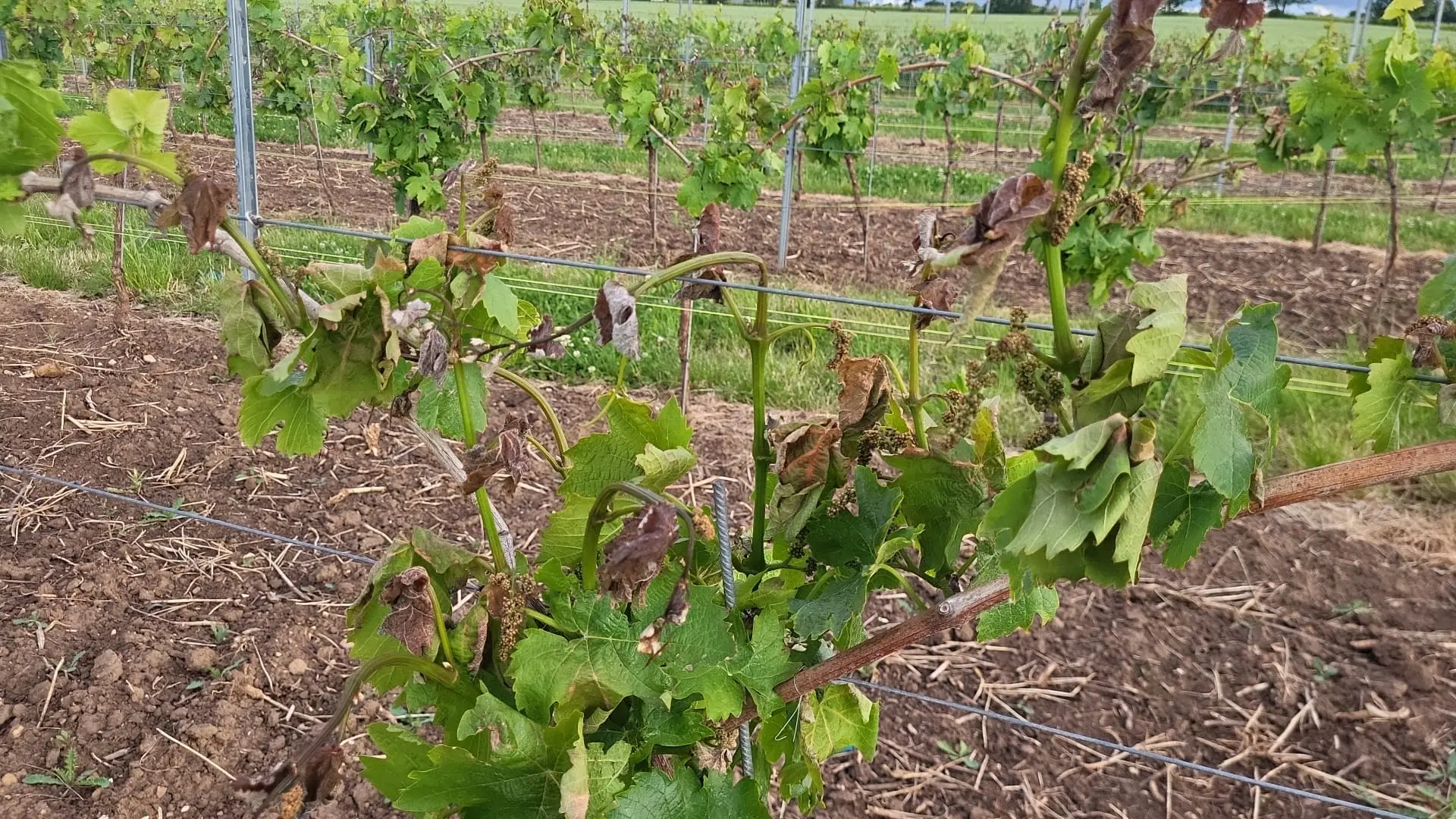
The first half of May was cool and dry, with an almost three-week break in the rain. Downy mildew did not play a role until shortly before flowering. On 24 May, a late frost caused considerable damage in the north-western part of the plot (see Figure 2) - and thus particularly in the VineForecast controls. The affected vines subsequently sprouted again. These vines meant that the Powdery mildew window in the plant remained open until the end of the season, as some of the frost-damaged vines only reached BBCH 71 in September.
Flowering began in the undamaged part in mid-June. After that, warm temperatures favoured a consistently high risk of Powdery mildew until mid-July. From the end of July, Downy mildew briefly came more into focus due to repeated rainfall.
Results in the Downy mildew trial
The infection rate for Downy mildew was generally low in 2025. Only heavier rainfall at the end of May/beginning of June led to an increased risk, but without typical symptoms (oil stains) becoming visible - a phenomenon that was not limited to the trial site, but was observed in many regions. For example, the DLR Mosel wrote in its Vine Protection Notices No. 11 on 11 June 2025:
“Theoretically, there is currently pressure in the boiler. Since last week, primary and secondary infections have continued to run off. In practice, however, the picture is different: we have not yet found or been notified of any oil stains in normally managed systems. Downy mildew is now being found in inadequately managed plants, albeit only in isolated cases.”
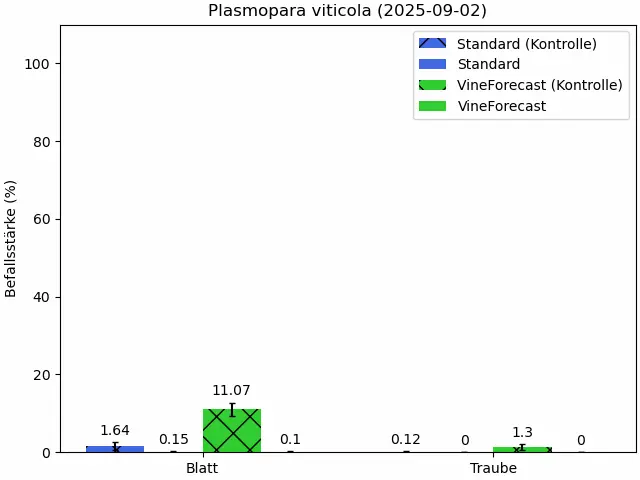
The impression that oil spotting was only observed in “isolated cases” was also shared by the Certis Belchim crop protection advisors at this time. Clear symptoms only appeared between mid-July and early August, particularly in the untreated control of the VineForecast variety (infestation: 11 % on the leaves). The grapes were largely spared as they had already developed a natural resistance to ageing by this time.
Treatment balance:
- Standard variant: 8 sprays (start on 6 May, BBCH 14/15)
- VineForecast variant: 6 sprays (start on 23 May, 17 days later)
|
Product |
VineForecast splash sequence |
Standard spray sequence |
|
Folpan |
Skipped |
6 May 2025 (11 days) |
|
Videryo F |
23 May 2025 (10 days) |
17.5.2025 (11 days) |
|
Profiler |
2 June 2025 (11 days) |
28 May 2025 (9 days) |
|
Zorvec Zelavin Bria |
13 June 2025 (12 days) |
7 June 2025 (12 days) |
|
Mildicut |
25 June 2025 (10 days) |
19 June 2025 (11 days) |
|
Pergado |
5 July 2025 (16 days) |
30 June 2025 (12 days) |
|
Delan Pro |
21.7.2025 |
12 July 2025 (12 days) |
|
Funguran |
Skipped |
24.7.2025 |
In both variants, the infestation on leaves and grapes remained almost at 0 %. These results show once again that the VineForecast algorithm makes it possible to reduce plant protection without risking increased infestation.
Results of the Powdery mildew trial
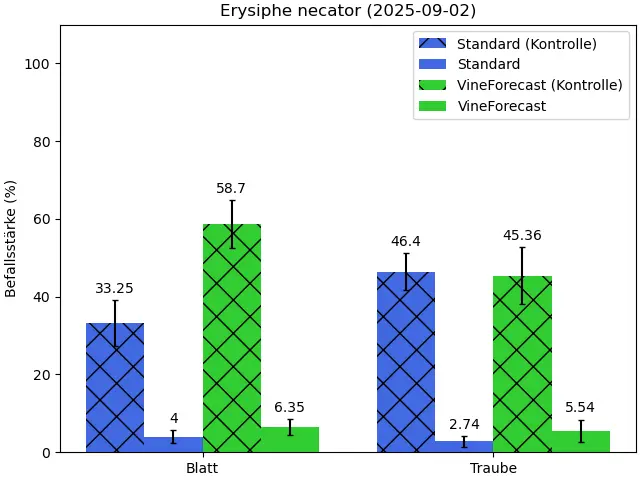
Powdery mildew had a much greater impact on the season. From flowering onwards, the risk of infection was consistently high. The late frost on 24 May particularly affected the VineForecast control, causing the vines to sprout very heterogeneously. Due to this heterogeneity in growth, some of the vines were in the sensitive powdery mildew window at almost all times – i.e. in the developmental stage around flowering, when the plants are particularly susceptible to infection. This increased susceptibility was subsequently reflected in a higher incidence of infection in the VineForecast control compared to the standard control:
- VineForecast control:
- Leaves: 59 %
- Grapes: 45%
- Standard control:
- Sheets: 33%
- Grapes: 46%
There were no differences in the results on the grapes, as only developed grapes were included in the assessment at the end of the season, while the more severely affected, still underdeveloped grapes on the frost-damaged vines were not included in the VineForecast control.
Both the VineForecast and the standard variant received 8 treatments. The infestation was greatly reduced in both cases. The infestation in the variants also showed no significant difference. The slight differences between the variants can therefore be attributed to the natural variance in the field.
|
Product |
VineForecast splash sequence |
Standard spray sequence |
|
Wetting sulphur |
6 May 2025 (17 days) |
6 May 2025 (11 days) |
|
Belanty |
23 May 2025 (10 days) |
17.5.2025 (11 days) |
|
Dynali |
2 June 2025 (8 days) |
28 May 2025 (9 days) |
|
Luna Max |
10 June 2025 (9 days) |
7 June 2025 (12 days) |
|
Talendo |
19 June 2025 (8 days) |
19 June 2025 (11 days) |
|
Sercadis |
27 June 2025 (12 days) |
30 June 2025 (12 days) |
|
Kusabi |
9 July 2025 (19 days) |
12 July 2025 (12 days) |
|
Kumar |
28.7.2025 |
24.7.2025 |
Influencing factor “Infestation in neighbouring plants”
Last year already showed that heavily infested controls significantly increased the disease pressure in neighbouring, treated varieties. Variants that were not directly adjacent to infested controls, on the other hand, showed a visibly lower level of infestation. Current models such as VineForecast or OiDiag from VitiMeteo do not yet take such external influencing factors into account. They calculate the risk of infection solely on the basis of meteorological variables such as temperature, humidity and precipitation. In future, models should therefore be expanded to include external factors - such as infestation in neighbouring plants - in the risk assessment. At VineForecast, we are already working on gradually integrating these biological factors into the modelling.
Conclusion
The 2025 field trial confirms this: With VineForecast, plant protection measures can be saved, especially for Downy mildew, without risking significantly higher infestation levels. For Powdery mildew, late frost damage and its effects on the field trial significantly limited the significance of the results. For future trials, the recording of frost damage should become part of the assessment in order to better quantify possible correlations between increased infestation and frost damage. In addition, the field trial shows that biological influencing factors such as infestation in the plant (and in neighbours) must become part of Powdery mildew modelling and the plant protection strategy in the future.